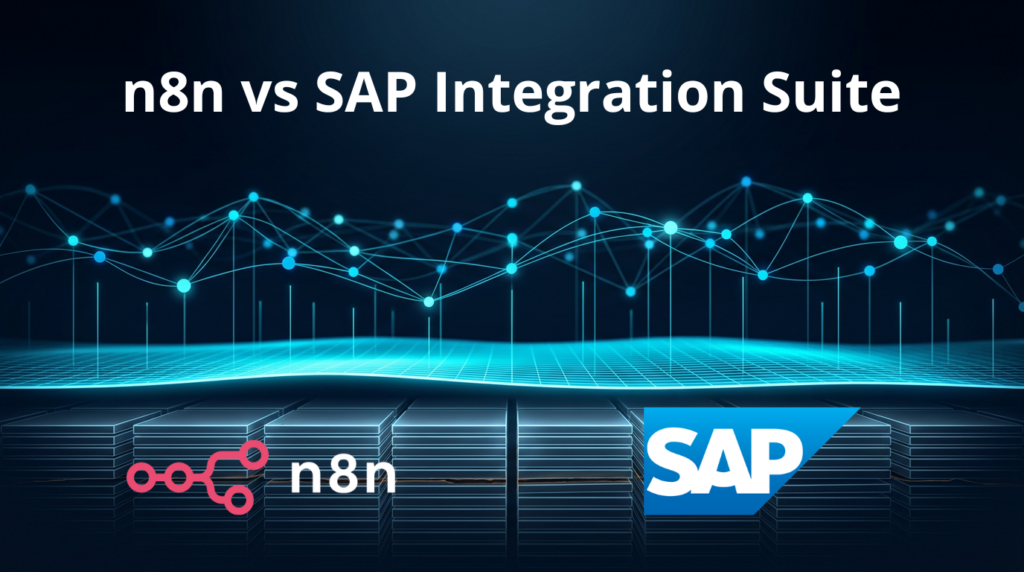
SAP’s investment in n8n announced during Sapphire 2026 lit up the integration community and the debate jumped almost immediately to conclusions. Is n8n a substitute for SAP Integration Suite or not? Is it a threat to the core or a harmless complement? Senior voices at SAP have already drawn a firm line, telling us the two solve fundamentally different problems and that treating one as a replacement for the other creates real architectural risk.
I want to rewind, because the honest answer is not on a keynote slide or a reference architecture diagram. It lives in the foundations, in what these platforms actually are and where they came from. So let us go back a while.
Where I am standing
I have spent years building on both SAP Cloud Integration and n8n, on client landscapes and on our own systems at Sygeon. We advise companies on exactly these choices and we do it without a vendor flag to defend. That is the perspective I am writing from.
Two platforms, different starting points
n8n began in Berlin in 2019 as an open-source workflow automation tool. SAP Integration Suite grew out of decades of enterprise integration heritage. They started from different places and that history shapes how each one feels to work with today. None of this makes one good and the other bad. Every platform on the market has its strengths and its weaknesses and pretending otherwise is how architects end up with the wrong tool in the wrong place.
n8n is two things at once
Here is the part that the “fundamentally different problems” framing skips over. n8n is both an integration platform and an automation platform. In SAP terms, it covers ground that SAP Cloud Integration covers and ground that SAP Build Process Automation covers and it can serve either purpose on its own. That dual nature is exactly why the comparison is harder than the official line suggests. The real comparison is between a single platform that does both jobs and a suite that has split those jobs across separate products.
SAP Integration Suite is not a single tool
The word “Suite” is doing a lot of work here. SAP Integration Suite is a collection of tools assembled over time around a core, rather than a single product.
That core is SAP Cloud Integration, the component most people still call CPI and its roots run straight back to SAP PI/PO. The iFlow, the Integration Flow that every CPI developer works in today, was born on-premise in SAP PI 7.31 in 2012 as a BPMN-based way to model an integration scenario. SAP took that concept to the cloud as SAP HANA Cloud Integration (HCI) around 2013, where the iFlow laid the foundation for what became SAP Cloud Platform Integration (CPI) in 2017 and is now simply SAP Cloud Integration inside the suite. The lineage is not trivia. The modeling paradigm and the runtime carry their PI/PO origins, which is why the cloud product still feels familiar to anyone who came from PO. Around that core, SAP added the other pieces:
- API Management, which is a continuation of Apigee, dating back to the SAP-Apigee alliance of 2014.
- Advanced Event Mesh, the event-driven streaming layer, which is built on Solace PubSub+. This is the Advanced Event Mesh specifically, distinct from the lighter SAP Event Mesh.
- Integration Advisor and Trading Partner Management, the B2B and EDI capabilities, added later to round out the trading-partner story.
This is the real shape of the product. A strong core, with API management, event streaming and B2B bolted around it. It is a good suite. But it is a suite, not a monolith and that matters for the comparison.
What the core actually does
Strip away the branding and the core capability of an integration platform is simple to state. Move data from one place to another and let a user model and control that flow in a way that is easy to reason about. Both SAP Cloud Integration and n8n do exactly that, which means at the core they solve the same problem.
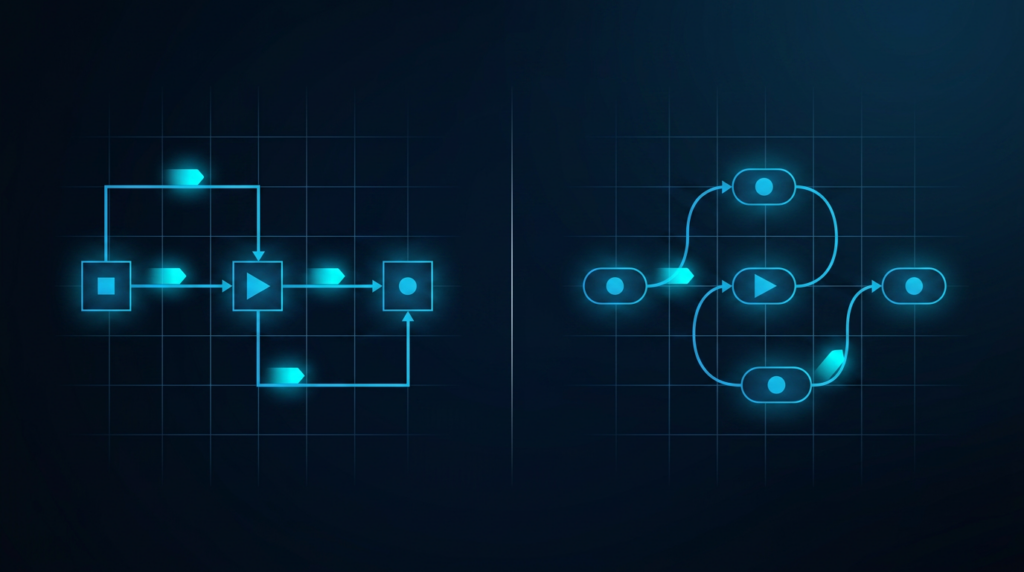
I have built on both for years, so I will say the quiet part plainly: the n8n canvas is more pleasant to work with than the CPI iFlow editor. And if you have ever gone looking for the documentation on a standard mapping function in Cloud Integration, you know where you end up. The runtime and the mapping engine still carry their SAP PI/PO heritage, because that is where they came from, so the cloud wrapper is far newer than the machinery inside it.
How I was positioning these tools before the announcement
This is where the SAP move lands closest to home. For years my advice to a particular kind of customer was consistent. If you cannot justify two SAP Integration Suite tenants at roughly five thousand euros each per month, but you want to start doing integration properly, n8n is a serious option. It covers integration and automation in one place, it runs in the cloud or on-premise when the situation calls for it and it lets a lower-mid-market company begin without the entry cost of the full suite. We follow our own advice here: Sygeon is an n8n user.
So n8n was already the pragmatic on-ramp for the companies that the Integration Suite pricing model leaves out. Then SAP took a stake in it. That is what scrambles the clean recommendation and it is a large part of why I am watching so closely where the line now gets drawn.
Where the comparison breaks down and where it does not
I am not going to claim n8n replaces everything. High-volume scenarios are a fair example. n8n can struggle there, but so can the IS core on its own, which is precisely why the EDA pattern and Advanced Event Mesh exist in the first place. High volume is a specialized job, handled by a specialized part of the suite and that part has no direct n8n equivalent today.
The same goes for the full API lifecycle and for B2B and EDI at trading-partner scale. Those are genuine strengths of the suite and they sit alongside the core rather than inside it. So this is not a takedown. n8n also carries its own caution, with the security issues of recent months still fresh. A fair assessment keeps all of that on the table.
The real question is positioning rather than capability
Once you put the foundations side by side, the interesting question is no longer what the platforms can do. It is how SAP chooses to position them inside BTP. The line that separates “governed core” from “last-mile automation” gets drawn for portfolio reasons, not by the nature of the tools. It reminds me of state borders ruled straight across a map: tidy on paper, indifferent to the terrain underneath.

Three overlapping tools is one too many
Look at what now lives under BTP: SAP Cloud Integration, SAP Build Process Automation and n8n, the last of these now embedded inside Joule Studio, SAP’s agent-building environment, as its workflow and automation engine. Three tools with heavily overlapping purpose, which is hard to sustain over a medium horizon. Either Cloud Integration’s iFlow mechanism gives way to n8n or Build Process Automation does, because there is no comfortable room for three.

The economics sharpen the point. SAP took a stake valuing n8n at $5.2 billion, more than double its valuation a year earlier, for a company with roughly $40 million in ARR. That is a strategic premium paid for a community of builders and now that asset has to be positioned against two products SAP already sells. Three overlapping solutions do not simplify a roadmap. They make it harder to trust and the people who feel that most are the partners advising customers on exactly these choices.
Where this leaves you
None of this settles the question for any single landscape overnight. What it changes is which questions are worth asking. What should guide the decision is what a platform actually does, not where a vendor decides to file it within BTP. Let the market and the customers running real workloads validate which platform owns which job and remember that the platform you commit to today has to survive the next reshuffle of someone else’s product line, which makes it an architecture decision before it is a procurement one.
At Sygeon we build vendor-agnostic integration and automation strategies. Whether the right answer turns out to be SAP Integration Suite, Workato, n8n or some combination, the point is to choose it deliberately, with the real trade-offs on the table.
If you are weighing your integration and automation options or simply want a clear-eyed second opinion on the platform and architecture choices in front of you, let us talk.