“Why should we invest in a third-party monitoring tool when SAP provides Cloud ALM for free?”
It is the most common question from CIOs and Integration Architects when we sit down to discuss their landscape strategy. And to be completely honest – it is a fair question.
Setting the record straight: SAP Cloud ALM is a solid tool. Its Integration & Exception Monitoring app is a massive step forward from the old days of staring at raw logs. If a landscape is small, 100% cloud-native on SAP Integration Suite, and only basic error alerting is needed, Cloud ALM will likely get the job done.
But when real-world, enterprise-scale, hybrid operations are analyzed, critical gaps start to appear. Those gaps are exactly why Amphi was built at Sygeon.
Here is a pragmatic, architect-to-architect breakdown of where standard Cloud ALM ends and where Amphi takes over.
Static Thresholds vs. Dynamic AI Baselines
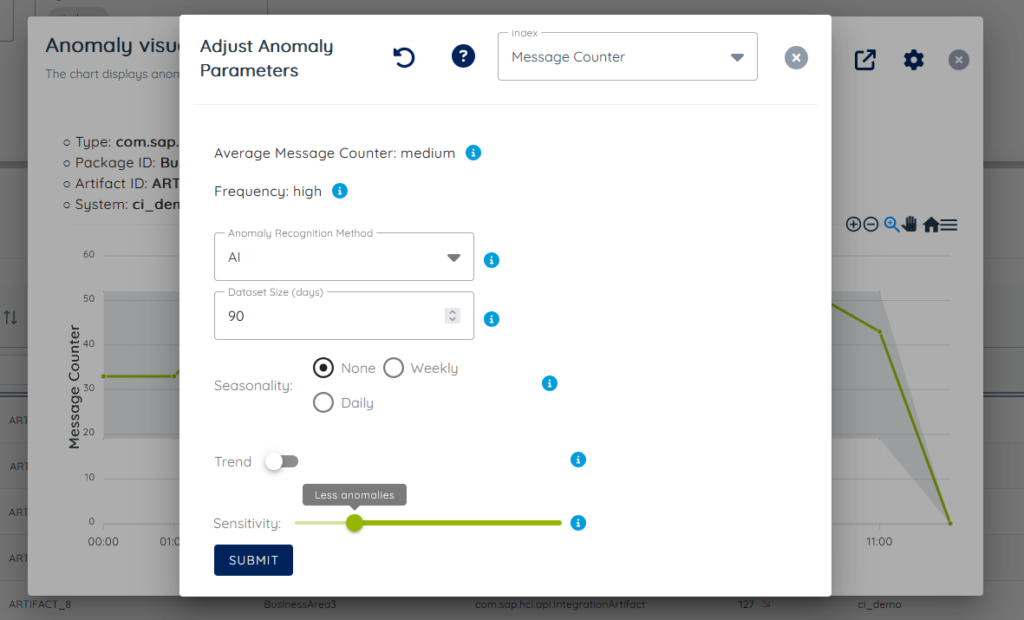
One of the features in Cloud ALM is its “Anomaly Detection” for message processing. However, if you look under the hood, this feature relies heavily on manual configuration. An administrator has to manually guess and set static “Upper” and “Lower” thresholds for message volumes.

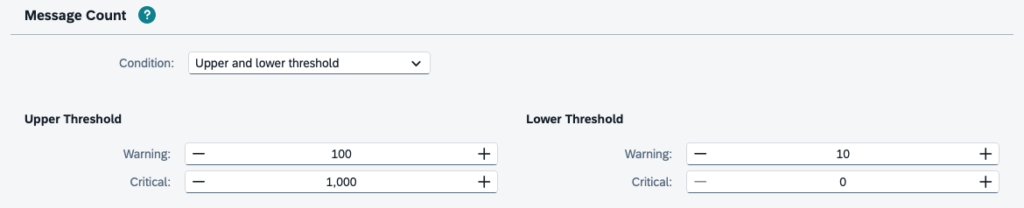
But business isn’t static.
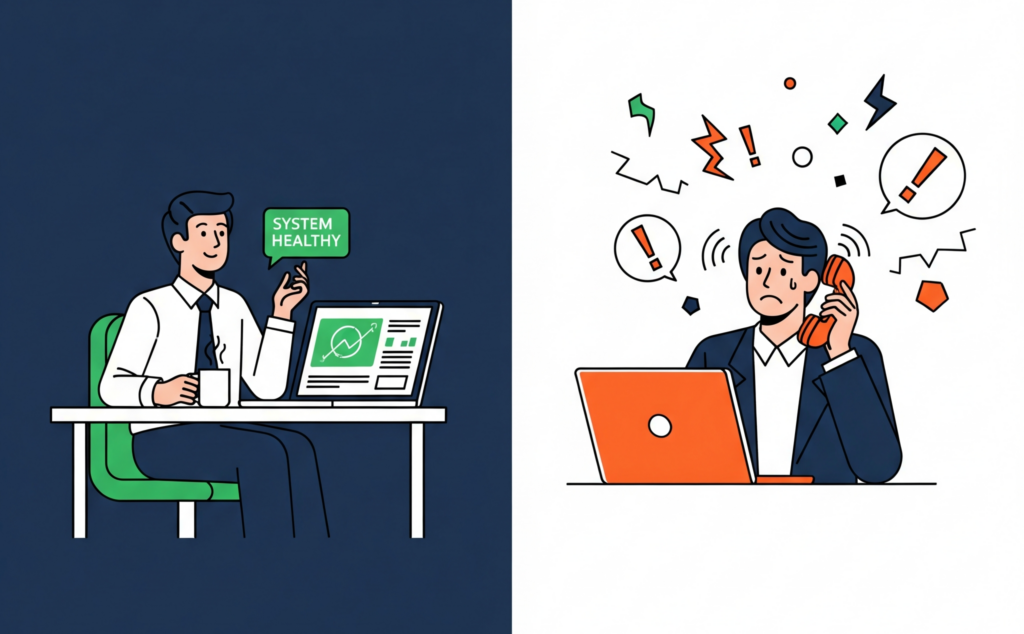
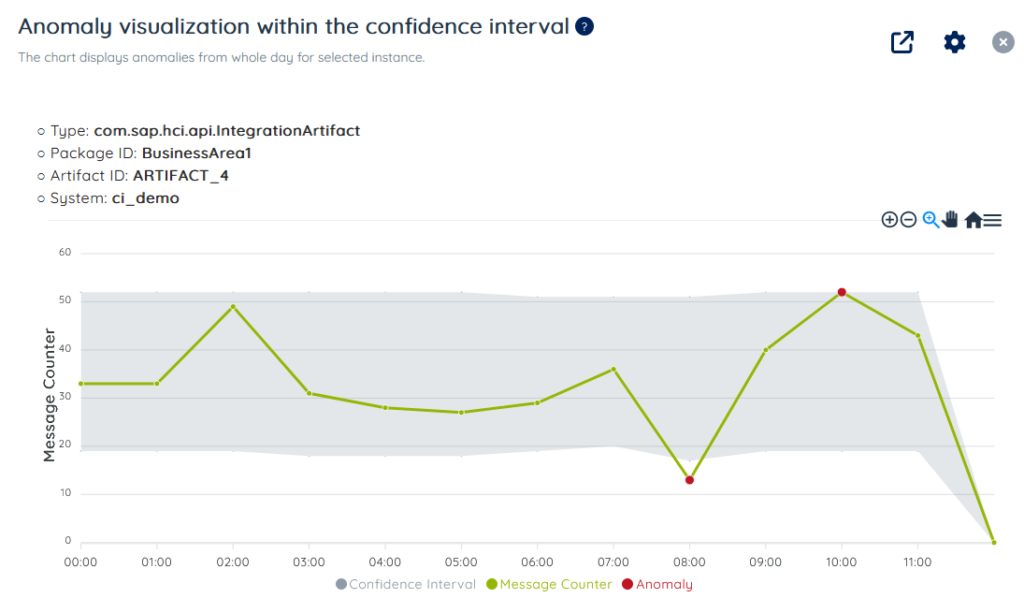
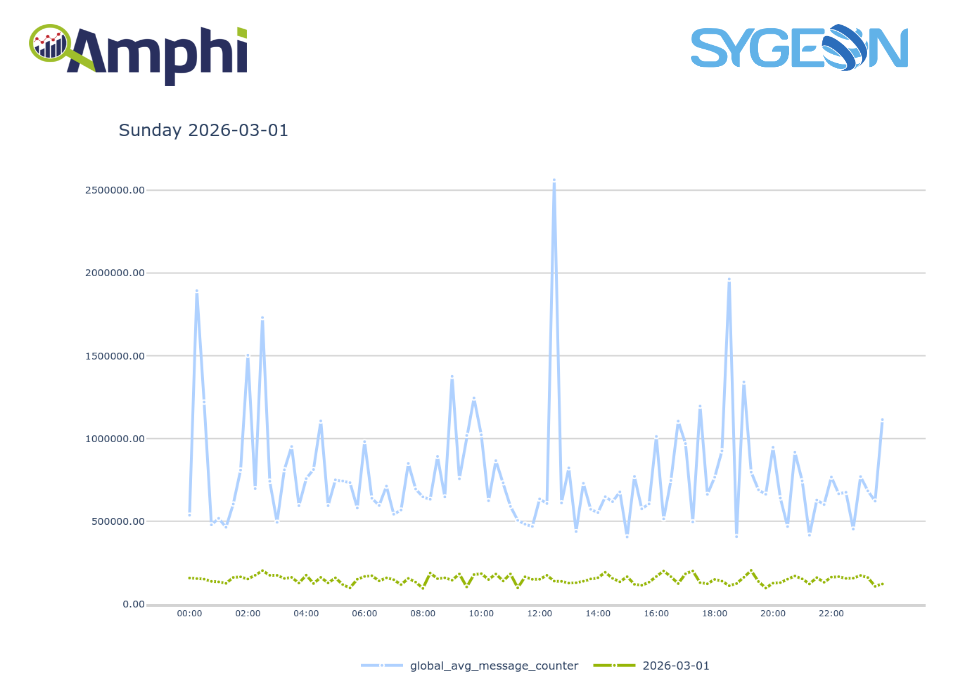
If a system processes 500 e-commerce orders on a Tuesday morning, a sudden drop to 50 is a crisis. But processing 50 orders on a quiet Sunday night? That is perfectly normal. A static threshold cannot tell the difference. It either misses the Tuesday crisis or spams the IT team with false alarms every Sunday.
Static thresholds force IT to guess business limits, leading to false alarms. Dynamic baselines learn the actual business rhythm.
The Amphi Approach: Machine learning and statistical models are utilized to learn the dynamic baseline automatically. Amphi figures out what “normal” looks like for every specific interface, hour by hour, without any user interaction. It detects the real anomalies and ignores the predictable lulls.
The Hybrid Reality (SAP PO + SAP IS)
The ultimate goal for most is the cloud, but the reality for enterprises today is a hybrid landscape. Organizations are likely running a massive footprint on SAP Process Orchestration while migrating critical interfaces to SAP Integration Suite.
Cloud ALM is heavily optimized for the cloud. Monitoring a legacy on-premise SAP PO environment through it often results in fragmented visibility and a disjointed user experience.
True visibility requires a unified view across both legacy on-premise systems and modern cloud middleware.
The Amphi Approach: Amphi was built to also support the hybrid landscape. It provides a single, unified dashboard where SAP PO and Integration Suite are treated as equal citizens. Support teams do not have to jump between different tools or learn two different monitoring philosophies.
Data Retention & The “Needle in the Haystack” Search
To save database space, Cloud ALM typically restricts detailed message data retention to a short window (often around 14 days). If historical trend analysis is required or if there is a need to investigate a missing order from last month, the data simply isn’t there.
Furthermore, searching for a specific failed business document in standard tools can feel like finding a needle in a haystack.
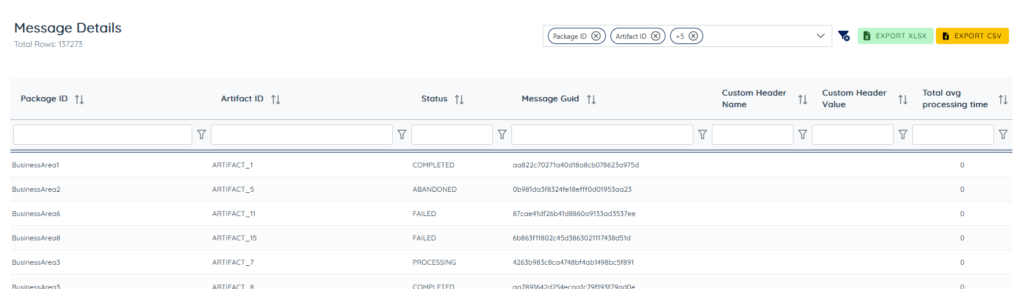
The Amphi Approach: Amphi allows for long-term data retention, enabling the analysis of year-over-year trends (like Black Friday volume spikes). More importantly, Amphi indexes Custom Headers. If the business asks what happened to Sales Order #99812, that exact number can be typed directly into Amphi to instantly trace its path, without having to dig through raw payload data.
IT Dashboards vs. Business Reporting
Cloud ALM is designed by for IT. Its dashboards are highly technical. Trying to show a CPI trace log to a Sales Director to explain why their reports are late is not an effective strategy.
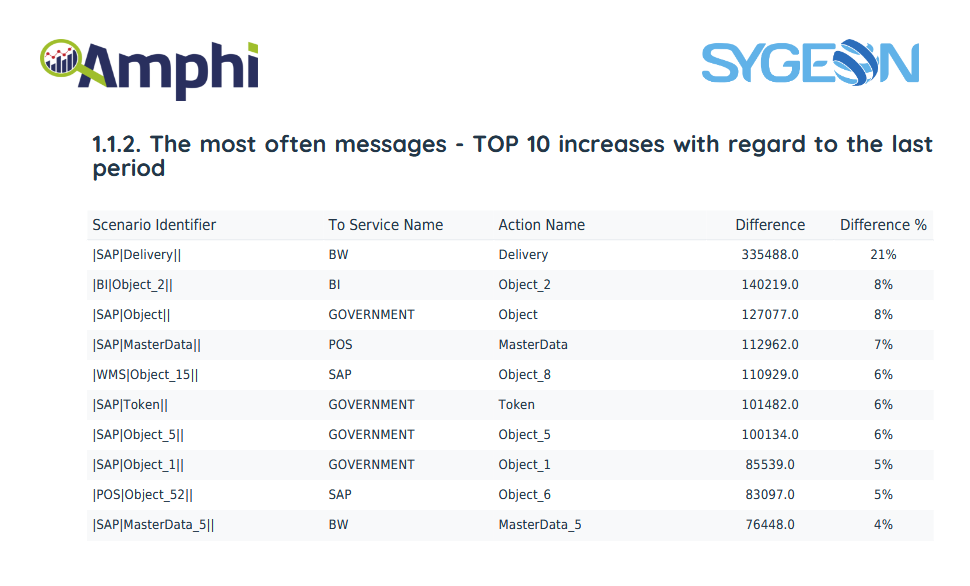
The Amphi Approach: Integrations are the nervous system of the business, so the business needs to understand them. Amphi automatically translates raw integration data into visual, scheduled PDF reports. Clean, executive-level reports of system health and SLA compliance can be generated automatically and handed directly to CFOs or business stakeholders.
The Right Tool for the Right Strategy
Cloud ALM remains an excellent, broad-spectrum tool. For organizations looking for a generalized monitoring solution that touches upon a wide variety of SAP applications across the enterprise, it is a highly logical choice.
However, for integration-heavy landscapes that require deep, specialized visibility, a different approach is needed. Amphi is highly specialized for SAP PO and Integration Suite, and its true differentiator is the development philosophy behind it.
If integration teams are tired of configuring manual thresholds or dealing with fragmented visibility, it is time to upgrade to a tool built specifically for their needs.
➡ Want to see the difference firsthand? A free trial is available where Amphi simply sits in the landscape, safely learning the baseline.